

Who Collects Japanese Woodblock Prints And Why?
Japanese woodblock prints are often discussed in terms of rarity, condition, artist popularity, and auction prices. But behind every sale is something much more important: people. The market for Japanese woodblock prints is not abstract or mechanical. It is an ecosystem made up of museums, private collectors, dealers, investors, and enthusiasts all interacting with the same pool of artworks in very different ways.
In a previous discussion, we explored the major factors that influence the value of Japanese woodblock prints, including artist demand, impression quality, condition, edition size, and broader market economics. This time, we’ll focus on the people participating in the market and how their motivations shape pricing and collecting trends.
If you understand who is buying Japanese woodblock prints and why, you gain a much deeper understanding of how the market actually works.
Prefer video? Watch the full breakdown on our Youtube channel.
Museums and Institutional Collectors

At the top of the collecting ecosystem are museums and institutions. Major museums around the world hold enormous collections of Japanese woodblock prints. The British Museum holds roughly 30,000 prints, while the Museum of Fine Arts, Boston is widely regarded as having one of the largest and finest collections of Japanese prints outside of Japan, with approximately 50,000 works.
Institutional collectors behave very differently from private buyers. Museums are not purchasing works for short-term resale or speculation. Instead, they are building cultural archives designed to preserve artistic and historical significance for future generations.
Museums typically focus on:
- Historically important works
- Representative examples of major artists
- Filling gaps within existing collections
- Long-term scholarship and preservation
Acquisitions are usually handled through curators, acquisition committees, and carefully managed budgets. Because of this, when a museum acquires a specific artist or series, it can significantly increase that artist’s legitimacy and visibility within the broader market.
But the term “museum quality” is often misunderstood. It is commonly used in marketing, but it is not an official or regulated grading standard. Many museum-held prints were acquired decades ago under very different collecting standards. Some are faded, trimmed, backed, or otherwise damaged. In fact, many private collectors own impressions in stronger condition than examples held by major museums.
That said, museums remain invaluable resources for collectors. Their curators and scholars provide authoritative attribution, cataloging, and historical research that help shape the field as a whole.
Specialist Private Collectors

Specialist collectors are often the heart of the high-end market. These are individuals who spend years, often decades, focusing on a very narrow area of interest.
A specialist collector might focus on:
- A single artist
- A specific print series
- A historical period
- A thematic category such as warriors, actors, landscapes, or folklore
Many collectors become deeply knowledgeable in their chosen niche. They study impression differences, compare editions, track auction records, and monitor dealer inventories across the world.
Some collectors pursue extremely specialized interests. One collector may focus entirely on works by Tsukioka Yoshitoshi, while another might collect only depictions of warrior women, or cats in prints. Others dedicate themselves to completing difficult multi-print series and spend years searching for missing pieces.
One fascinating aspect of specialist collecting is the idea of upgrading.
A collector may initially purchase a mid-quality impression simply to fill a gap in a collection. Later, when a stronger example becomes available, they upgrade and sell the earlier print back into the market. This constant cycle of upgrading helps drive movement within the upper tiers of the market.
When two highly knowledgeable collectors compete for a superior impression, auction prices can escalate dramatically. These competitive moments are often what create headline sales results.
Aesthetic Collectors
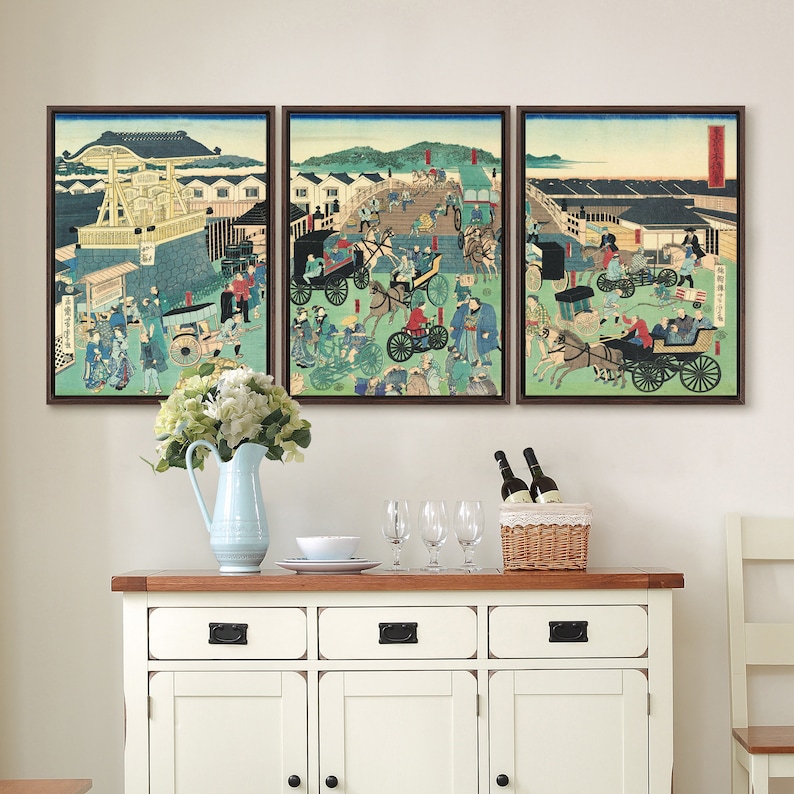
Not every collector is driven by rarity or scholarship. A large and incredibly important segment of the market consists of aesthetic collectors, buyers who simply love the image itself.
These collectors respond emotionally to:
- Color
- Composition
- Atmosphere
- Decorative beauty
Someone may purchase a landscape by Utagawa Hiroshige because they are drawn to the snow, rain, or quiet mood of the scene, not because it is an early impression or an especially rare state.
For aesthetic collectors, the artwork’s emotional impact matters more than technical distinctions such as block state or printing sequence.
This group plays a critical role in the market because it provides liquidity and stability within the mid-range price segment. Attractive, well-preserved works continue to have strong demand even when they are not exceptionally rare masterpieces.
Without aesthetic collectors, the market would be far thinner and less stable overall.
Investors and Speculators![]()

Some buyers approach Japanese woodblock prints primarily as financial assets.
These collectors often focus on:
- Recognizable artists
- Historical price trends
- Auction comparables
- Market momentum
They tend to prioritize:
- Strong impressions
- Excellent condition
- Provenance
- Broad market appeal
Investor behavior is closely tied to larger economic conditions. During periods of financial uncertainty, discretionary art purchases often slow. When confidence returns, higher-end works can rebound quickly.
Like many art markets, Japanese woodblock prints can experience cycles of increased demand driven by broader trends, media attention, or renewed scholarly interest in certain artists.
Dealers as Market Participants

Dealers are also active participants within the collecting ecosystem.
A dealer’s role typically includes:
- Acquiring inventory from estates, auctions, and collections
- Holding stock, sometimes for years
- Studying market trends
- Vetting authenticity and condition
- Educating collectors
Good dealers do more than simply resell inventory. They help interpret the market by providing historical context, attribution, condition analysis, and collecting guidance.
Dealers also help connect different parts of the market together, serving as bridges between institutions, collectors, estates, and new buyers entering the field for the first time.
The Role of Auction Houses
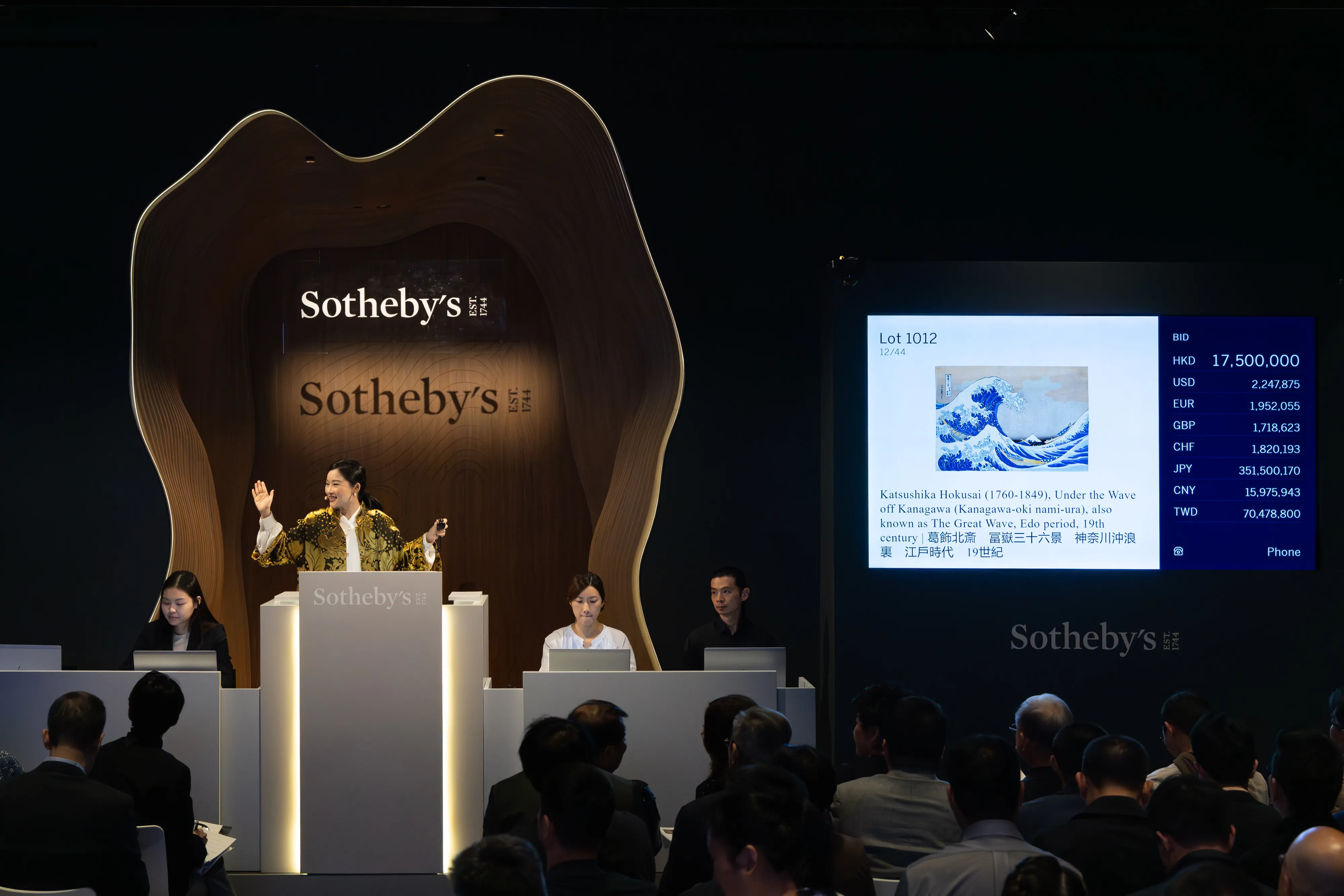
Auction houses occupy a unique position within the market. Companies such as Sotheby's, Christie's, and Bonhams are not collectors themselves. Instead, they function as intermediaries.
Auction houses:
- Aggregate supply
- Market works internationally
- Create public price discovery
- Establish transparent sales records
Auction results become important reference points for dealers, collectors, and investors alike. In many ways, auctions act as the public scoreboard of the art market.
However, auction prices should always be interpreted carefully. Auctions capture competitive moments between motivated buyers. They do not necessarily represent stable long-term market value.
A record-breaking result may reflect:
- Two collectors competing aggressively
- A museum filling a major gap
- Investor speculation
- Exceptional condition or rarity
Understanding the context behind a sale is often just as important as the final hammer price itself.
Why Understanding the Market Matters
When people ask why one Japanese woodblock print sells for a modest amount while another reaches astonishing prices, the answer often comes down to who was competing for it.
It may have been:
- A museum seeking an important historical example
- Two specialists fighting over a rare impression
- A decorator searching for the perfect image
- An investor following market momentum
- A dealer replenishing inventory
The Japanese woodblock print market is not driven by a single type of buyer. It is a layered ecosystem made up of people with very different motivations and goals.
Understanding those motivations makes you a far more informed collector.
Ready to start or expand your collection? Browse our curated selection of verified Japanese woodblock prints.